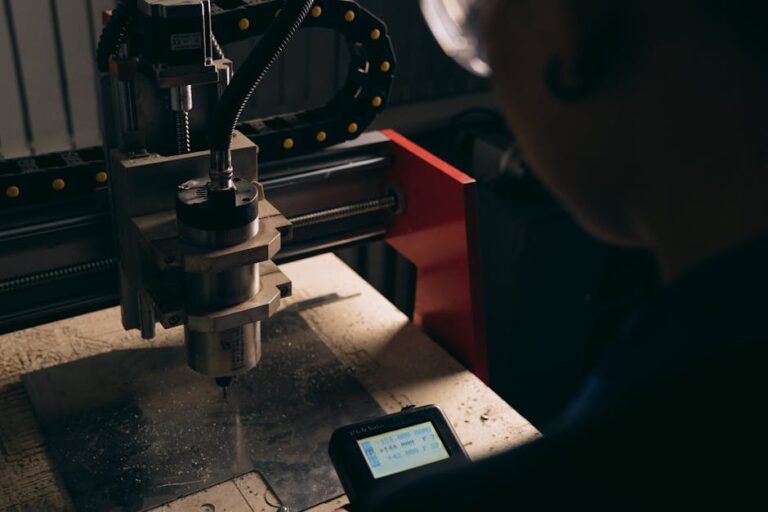

Splined Shafts: Definition, Types, and Machining Techniques

A splined shaft has a series of ridges or grooves (called splines) along its length. These splines interlock with corresponding grooves in a mating component, creating a secure connection that can endure rotational forces. Splined shafts can feature either internal or external splines, ensuring reliable torque transmission and proper alignment.

By preventing slippage and promoting even load distribution, splined shafts significantly improve system performance and durability. They are preferred in industries that require secure and efficient power transfer, such as automotive, aerospace, and industrial machinery.
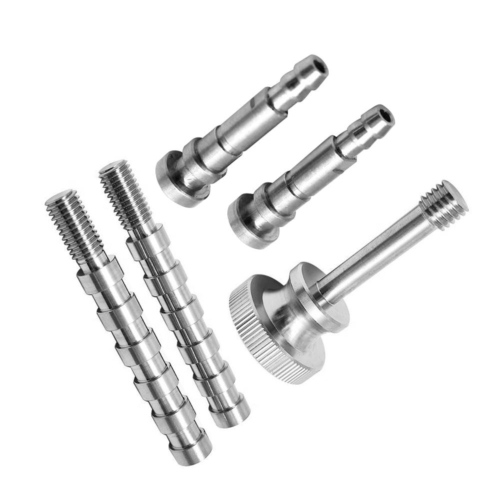
Splined Shafts Definition, Types, and Machining Techniques

What is a Splined shaft?

Splined shafts are specialized mechanical components that play a crucial role in diverse machinery and automotive systems. They are characterized by distinct ridges, known as splines, which can be located on either the inside or the outside of the shaft.

This design allows splined shafts to fit perfectly into matching grooves in a connecting component, resulting in a strong, reliable connection. This interlocking mechanism is essential for efficient torque transmission and precise rotational alignment. By preventing slippage and ensuring even load distribution, splined shafts enhance both the performance and durability of the system.

The adaptability and precision of splined shafts make them a favored option for industries that require secure and efficient power transfer.
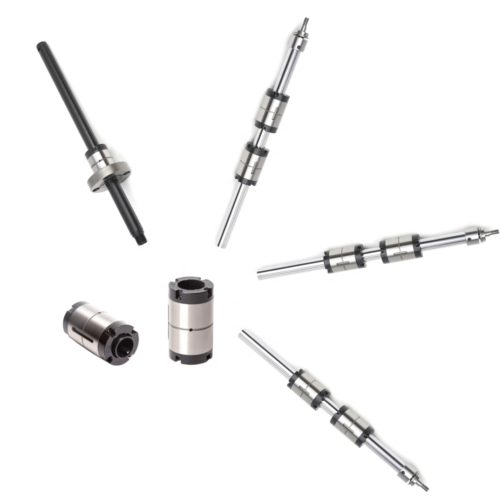
What is a Splined shaft

Design Considerations

Before starting the machining process, it is essential to consider several design factors:

  • The spline design must be able to transmit the required torque without failure.
  • Considering axial thrust and radial forces is crucial to avoid premature wear or failure.
  • The spline material must be compatible with the hub or gear material to ensure a smooth, wear-resistant interface.
  • Maintaining tight tolerances is essential to ensure a secure, vibration-free connection.
  • Design should ensure proper lubrication to minimize friction and wear.

Functions of Splined Shafts

Several key functions can be accommodated by a splined shaft in mechanical assemblies.

  1. Torque Transmission: This primarily focuses on transmitting rotary motion from a driving member to a driven member, such as from a motor to a transmission.
  2. Compensation for Axial Misalignments: Splined shafts can accommodate slight misalignments between connected parts, reducing wear, tear, and stress on those components.
  3. Increased Load Capacity: By distributing the load through multiple splines, it is possible to transmit significantly higher torque compared to a keyed shaft of the same diameter.
  4. Linear Motion: Splined shafts allow the connected parts to slide along their length while transmitting torque. This sliding capability is crucial for applications such as collapsible steering columns and transmission shift devices.
  5. Phasing and Indexing: The proper arrangement of the splines ensures that the parts fit together in a specific position, thereby providing the necessary phasing required for applications such as timing devices.

Types of Spline Shafts

Spline shafts are available in various designs that influence torque transmission and alignment. Below are three common types of spline shafts.

Straight-Sided Splines

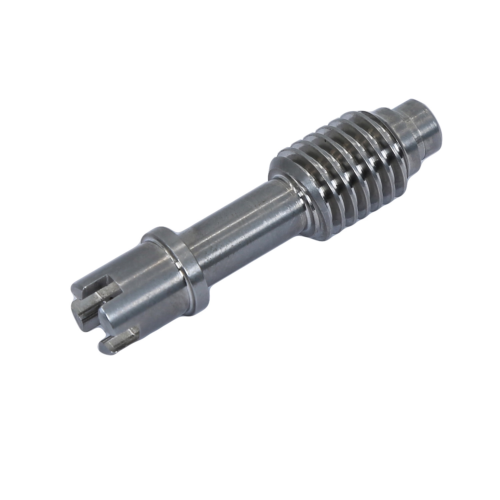
Straight-sided splines feature parallel-sided teeth with a consistent width, resulting in a simpler tooth design. The teeth have a square or rectangular cross-section, making them easier to machine than involute forms. This type of spline is commonly used in applications where high precision or load distribution is not critical.
Applications:

  • Agricultural machinery
  • Low-speed drive systems
  • Construction equipment
  • Custom mechanical assemblies

Advantages: 

  • Easy to manufacture and inspect.
  • Suitable for moderate torque transmission.
  • Reduced tooling and production costs.

Disadvantages:

  • Less efficient load distribution.
  • Not self-centering; requires precise tolerances for concentricity.
  • Prone to wear under high torque or misaligned conditions.

Straight-Sided Splines

Involute Splines 

Involute splines have a tooth profile based on the involute curve, similar to involute gears. Unlike straight teeth, these are curved, which allows for smooth meshing and uniform torque transmission, even under high loads. This design ensures interchangeability and alignment accuracy due to standardized profiles, such as those outlined in ANSI B92.1.
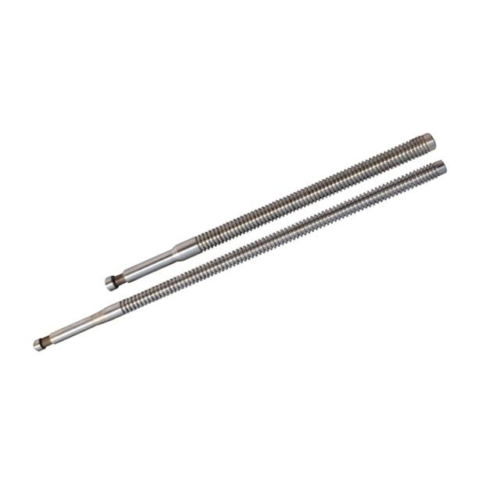
Applications:

  • Automotive transmissions
  • Off-road machinery
  • Industrial gearboxes
  • Aircraft engine systems

Advantages: 

  • Smooth engagement under torque load
  • High load-carrying capacity
  • Self-centering characteristics
  • Standardized profiles simplify replacement and design

Disadvantages:

  • Machining is more complex than that of straight-sided splines.
  • The cost is higher for small production runs.
  • Precision tooling is required for accurate profile generation.

Involute Splines

Serrated Splines

Serrated splines have V-shaped or angular teeth with 45° or 60° flanks. These splines are typically smaller and shallower, designed primarily for alignment and positioning rather than for torque transmission.
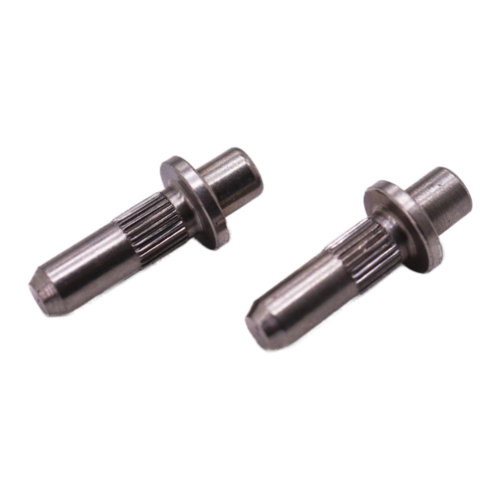
Applications: 

  • Adjustment knobs and controls
  • Light-duty rotary couplings
  • Medical and dental tools
  • Instrumentation assemblies

Advantages:

  • Optimal for precise alignment and indexing.
  • Easily manufactured using broaching or rolling.
  • The compact design fits into small assemblies.

Disadvantages:

  • Not suitable for high torque applications.
  • Can wear out quickly under repeated load cycles.
  • Shallow engagement limits strength.

Serrated Splines

Different Splined Shaft Machining Processes

Broaching: Linear and Rotary

Broaching is a machining process that employs a toothed tool, a broach, to remove material in a single pass. This method is exceptionally efficient for producing both internal and external splines. It provides high precision and a smooth finish, making it ideal for quickly manufacturing large quantities of splined components. The broaching process can work with various materials and offers consistent repeatability, making it a popular choice for spline production.

CNC Milling: The Most Common Method

Milling is a basic aspect of CNC machining that employs rotary cutters to shape a workpiece precisely. It is particularly specialized in creating involute splines, showcasing its adaptability in handling complex spline geometries. Modern CNC milling machines ensure designs are produced with exceptional detail and tight tolerances. Because of its versatility, spline milling is the top choice for both prototyping and large-scale production of splined shafts.

Hobbing: High Accuracy and Cost-Effective

Hobbing is a specialized gear-cutting process that employs a hobbing machine and a cylindrical tool known as a hob. The hob, which is equipped with a series of cutting teeth, rotates and gradually cuts the spline profile into the workpiece. Hobbing is recognized for its high speed, accuracy, and cost-effectiveness, making it particularly suitable for manufacturing external splines. It is a primary method for producing gears and splines, resulting in components with excellent surface finishes.

Extrusion: Achieving Fixed Cross-Sectional Profiles

Extrusion is a manufacturing method in which materials, including metals, are forced through a die to create a specific cross-sectional shape. While this technique is commonly associated with plastics, it is also essential for producing metal internal splines. The extrusion process produces uniform profiles, making it suitable for large-scale production of splined shafts. This approach is cost-effective as it minimizes waste and can accommodate intricate internal spline designs when combined with additional machining processes.

Shaping: Traditional Approach for Internal Splines

Shaping uses a single-point cutting tool that moves linearly against a stationary workpiece, removing material layer by layer. This traditional method is especially effective for creating internal splines. Although it is slower than other techniques, shaping can produce intricate spline profiles with high precision. Its simplicity allows for easy setup and adjustments, making it perfect for both small-batch and large-scale production.

Heat Treatments of Splined Shafts and Their Effects

Heat treatment is often necessary to achieve specific properties in the spline shafts used.

Through Hardening (Quenching & Tempering): This enhances the strength and hardness of the complete shaft, making it suitable for applications requiring high wear and load capacities.

Case Hardening (Carburizing, Nitriding): This process creates a hard, wear-resistant outer layer while the core remains tough and ductile. This is especially important for splines, where a hard exterior is essential for wear resistance, but the core must be tough enough to withstand sudden shock loads.

Induction Hardening: This method only affects the splined section of the shaft, leaving the rest in its original condition. The process has such a high degree of precision that it eliminates the need for the lengthy heat treatment processes typically required.

Effect: Proper heat treatment of splined shafts significantly enhances their surface hardness as well as their resistance to fatigue and wear. This improvement directly contributes to increased service life of the component, especially under heavy load conditions.

Materials Used in the Machining of the Splined Shaft

The selection of materials for shaft manufacturing depends on its application and the machining process. Key factors include strength, corrosion resistance, wear properties, and cost.

Aluminum Alloys

Aluminum alloys are lightweight yet strong materials commonly used to construct spline shafts, particularly in applications that require reduced weight. These alloys are highly corrosion-resistant and offer an excellent strength-to-weight ratio, ensuring durability without sacrificing performance. Their malleability enables intricate spline designs, making them versatile across industries.

Stainless Steel

Stainless steel is widely applied in the construction of spline shafts due to its outstanding corrosion resistance and strength. This material provides durability even in challenging environments, making splined shafts more reliable. Its non-reactive properties and excellent wear resistance make stainless steel an ideal choice for long-lasting and efficient splined shafts.

Alloy Steels

Alloy steel, which contains chromium and molybdenum, is commonly used in the construction of spline shafts due to its superior properties. It offers increased strength and wear resistance, enabling it to perform better under demanding conditions compared to standard steel. Its versatility and adaptability make alloy steel the preferred choice for high-performance splined shafts.

Carbon Steel

Carbon steel is a preferred material for spline shaft construction due to its strength and malleability. It offers an outstanding balance between durability and machinability, making it suitable for intricate spline designs. Additionally, its cost-effectiveness and robustness make carbon steel a popular option for various industrial and automotive applications.

Practical Uses for Machined Spline Shafts

Automotive

Splined shafts are crucial components in automotive systems, including steering mechanisms, transmissions, and drive shafts. These shafts facilitate smooth steering, efficiently transmit engine power to the wheels, and ensure reliable gear shifting without slippage.

Aerospace

Splined shafts play a crucial role in the aerospace industry, particularly in aircraft engines, where they transmit power to essential components such as compressors and turbines. Additionally, spline shafts are commonly used in landing gear assemblies and helicopter rotor shafts. Their ability to maintain proper alignment under immense stress is vital in these applications.

Industrial Machinery

Industrial machinery relies heavily on appliance shafts to ensure the efficient operation of machine equipment and conveyor systems. In conveyor systems, splined shafts help align material movement. For milling machines and lathes, spline shafts provide the necessary motion control to ensure uniform product quality and precise production.

Marine Sector

In marine propulsion systems, splined shafts are essential for transmitting engine power directly to the propeller, allowing ships to move efficiently through the water. These shafts also play a crucial role in heavy-duty ship winches and steering systems. Their ability to withstand shock loads and resist corrosion is vital for performance in marine environments.

Agricultural Equipment

Splined shafts are essential components in agricultural machinery, including harvesting equipment, tractors, and irrigation systems. They facilitate the smooth transmission of power to attachments like pumps and plows. This ensures that your equipment operates reliably, even in harsh conditions and under heavy workloads.

Automation and Robotics

In robotics and automation, splined shafts enable controlled functioning and accurate movements. These shafts provide steady rotational motion with precise positioning in automated assembly systems and robotic arms. They support high-speed operations while reducing wear and friction. This is why spline shafts play a crucial role in extending equipment life and enhancing operational performance in automated manufacturing systems.

Conclusion

Splined shafts are essential components in mechanical engineering, particularly in systems that need precise torque transmission and reliable alignment under load. By understanding the different types of splined shafts, their manufacturing processes, material selection, and application-specific considerations, engineers and buyers can make informed decisions that greatly affect the longevity and performance of their machinery.