Our Location

Quality control in manufacturing has become increasingly important as production facilities continue to expand. No manufacturer wants to inconvenience customers by delivering inferior products, but it is impractical to monitor every item that leaves the facility manually.
As a result, the importance of quality control remains vital in any manufacturing unit. In this article, you will learn about the benefits of quality control in the manufacturing process, examples of quality control in manufacturing, and more.

Manufacturing processes in quality control ensure that products meet established quality standards by consistently monitoring, inspecting, and testing them during production. The focus is on identifying issues with raw materials, machinery, and the final product to prevent defects before they reach customers.
By implementing quality control procedures, businesses can ensure consistent quality, minimize errors, and enhance efficiency. Techniques such as statistical process control help evaluate performance trends and make data-driven adjustments.
Effective quality control in manufacturing safeguards product quality, improves operational outcomes, and boosts customer satisfaction. Companies that prioritize quality control management protect their reputation and ensure long-term profitability.
Quality control consists of a series of processes designed to ensure that manufactured products meet the desired quality standards. It involves systematic inspections, testing, and monitoring to detect any deviations from established criteria. By understanding these fundamentals, organizations can implement effective quality control measures that promote consistency and excellence throughout all stages of production.
The concept of quality control dates back to the early 20th century, when manufacturers started to recognize the importance of ensuring product quality. The first quality control methods were established in the 1920s and 1930s with the introduction of statistical process control (SPC) and total quality control (TQC). In the 1950s and 1960s, quality control circles and zero-defect programs gained popularity. The 1980s and 1990s saw the emergence of total quality management (TQM) and Six Sigma. Today, quality control is an essential component of modern manufacturing, emphasizing continuous improvement, customer satisfaction, and regulatory compliance.

The importance of quality control in manufacturing can’t be overstated, because it directly impacts customer satisfaction, brand reputation, and overall business success. Effective quality control not only minimizes defects but also reduces waste and rework costs, ultimately increasing profitability. In today’s world, where consumers are more discerning than ever, prioritizing quality in manufacturing practices is essential for maintaining a competitive advantage.
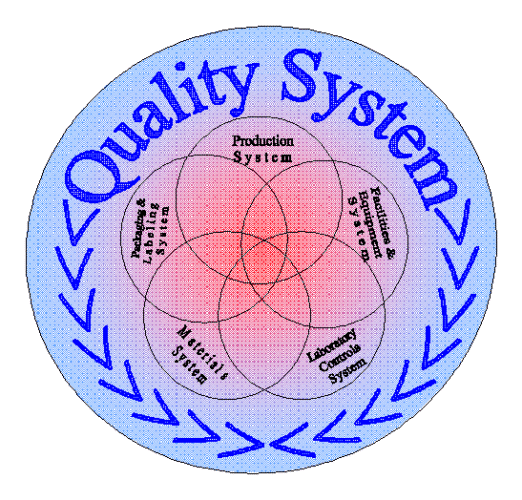
Both Quality Control and Quality Assurance are significant parts of a Quality Management System (QMS). While they are related concepts, they differ in important ways.
Quality Control is a product-oriented approach that concentrates on identifying and amending defects in finished products. It includes techniques like inspection and testing to guarantee that the product meets the required quality standards. Quality control methods are applied at various stages of the manufacturing process, with the common goal of ensuring minimal deviation from established specifications.
On the other hand, Quality Assurance is a process-oriented, proactive approach that aims to prevent defects in products before they occur. It focuses on designing production processes at the organizational level to minimize the likelihood of defects and deviations.
In summary, Quality Assurance is a broader concept than Quality Control in manufacturing. Together, QA and QC collaborate to ensure optimal quality management throughout manufacturing processes.
This method involves checking every single item before it leaves the production line. Unlike random sampling, this approach examines each unit to ensure it meets quality standards. Industries such as medical devices, pharmaceuticals, aerospace, and food production rely on this technique because even one faulty product can cause harm or lead to legal issues.
For example, a medicine label with the wrong dosage or a broken aircraft part can result in serious consequences. The main advantage of this method is that it eliminates the risk of unnoticed errors.
However, it requires significant time and resources, especially when dealing with large production volumes. Nevertheless, 100% inspection becomes essential when safety concerns or strict regulations allow no margin for error.
Manufacturers often opt for this approach when the cost of a defect far exceeds the expense of additional inspections, or when customers demand absolute assurance of quality.
This method employs advanced technologies such as cameras, sensors, and AI to detect defects as products move along the production line. It monitors each item in real time and quickly identifies any that do not meet quality standards.
Industries such as electronics, automotive, and packaging use these systems to detect issues like cracks, missing parts, or incorrect shapes without interrupting the production process. This approach saves time and enables teams to address mistakes before they escalate into bigger problems.
The most significant advantages of this method are speed and accuracy. While humans may overlook small flaws after extended periods of work, machines can continuously check for defects without fatigue.
This approach emphasizes reducing waste, minimizing waiting times, and lessening effort while placing customer value at the center of every decision. It works by identifying and eliminating process elements that do not add value, such as overproduction, prolonged wait times, or rework.
You can see lean principles applied across various industries, including automotive, electronics, consumer goods, and even healthcare, where speed, accuracy, and smooth workflow are essential. One of the great benefits of Lean is its simplicity and clarity.
Quality controllers can concentrate on solving real problems quickly and improving the workflow within the system. Lean is most effective in stable environments. If your business experiences constant changes, Lean will need to be adjusted frequently. However, when manufacturers want to remain flexible, respond more quickly to demand, and maintain high-quality standards, Lean proves to be an excellent choice.
This approach utilizes data and a step-by-step analysis to eliminate defects and enhance process reliability. The goal is to achieve near perfection—just 3.4 defects per million opportunities—by reducing variations in manufacturing or execution.
At the core of Six Sigma is the DMAIC process: Define the problem, Measure current performance, Analyze root causes, Improve the process, and Control future results.
Industries such as electronics, aerospace, finance, and healthcare rely on Six Sigma when precision is critical, and errors can be costly.
One significant advantage of Six Sigma is that it encourages teams to rely on facts rather than guesses, leading to smarter decisions and long-term benefits. This methodology helps reduce waste, improve efficiency, and enhance customer satisfaction by addressing the root causes of problems.
Statistical Quality Control (SQC) utilizes data and mathematics to measure and enhance product quality. Instead of inspecting every single product, manufacturers take samples and use various tools such as control charts, acceptance sampling, and Pareto analysis to identify patterns, trends, or issues. Industries such as electronics, textiles, and automotive rely on SQC to determine whether a batch of products meets quality standards without the need for exhaustive inspection of each unit.
This approach is efficient for producing large volumes of items, as it provides a smart way to detect problems. The advantages include quicker decision-making, reduced inspection costs, and the early identification of defective batches.
When teams implement SQC effectively, they can uncover the root causes of recurring issues and address them before they escalate. This technique is valuable when conducting a full inspection is too costly, but reliable feedback on quality is still necessary.
The SPC method focuses on maintaining stable and consistent manufacturing processes by tracking variations in real time. Instead of waiting until the end of production to inspect the final product, SPC monitors what is happening during the manufacturing process. It uses control charts and data points to monitor the performance of machines or systems, enabling teams to identify unusual changes early.
For instance, industries such as semiconductors, automotive, and precision engineering rely on SPC to maintain tight tolerances and prevent defects before they occur.
One significant advantage of SPC is its ability to reduce waste by addressing problems at their source. Additionally, it helps teams comprehend the natural limits of their systems and pinpoint areas that require adjustment. SPC is particularly effective in environments where even minor errors can have serious consequences, or where process consistency directly impacts quality.
TQM emphasizes that quality is everyone’s responsibility, rather than just the concern of inspectors or managers. This approach involves every employee, from machine operators to senior executives, working daily to improve products, services, and processes. TQM operates on the belief that when everyone is invested in quality, the entire organization improves over time.
You can find this method implemented across industries such as automotive, electronics, hospitality, and healthcare, where collaboration and long-term improvement are essential. A key strength of TQM is its ability to foster a shared mindset throughout the company.
When employees feel engaged in the process, they are more likely to identify problems early and propose more innovative solutions. Over time, this results in fewer defects, increased customer satisfaction, and improved team morale. TQM is most effective when a company aims to establish enduring habits rather than seeking quick fixes.
Manufacturing is advancing by leveraging virtual models and connected devices to monitor processes in real time. A digital twin makes a virtual replica of a physical product or production line, enabling manufacturers to simulate and test changes without disrupting actual operations. Additionally, IoT devices, such as sensors and intelligent machines, collect data on temperature, pressure, and speed and transmit it instantly for analysis.
Industries such as automotive, aerospace, and electronics depend on these tools to predict problems before they occur and maintain consistent quality. This approach enables early detection of defects through continuous monitoring, helping prevent costly recalls and downtime. It also allows teams to understand how small changes in conditions can affect the final product, enabling them to make quick adjustments.
For these reasons, many manufacturers believe that integrating digital twins and IoT will lead to more agile, smarter production lines.